Showing posts with label science. Show all posts
Monday, 29 September 2008
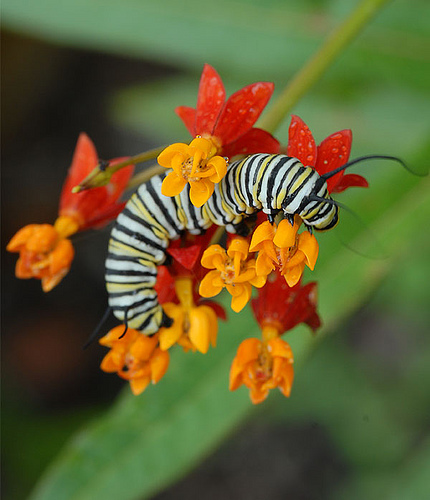
Unexpected transformations
Tuesday, 5 August 2008
The first cloned pet
"This is a miracle," said Bernann McKinney from Hollywood in California, hugging five clones of Booger at Seoul National University's veterinary school.
RNL Bio, the company which arranged the re-creation of Booger through his refrigerated ear tissue, hailed the event as the world's first commercial cloning of a pet dog. The company originally charged $150,000 to clone Booger, but it agreed to come down to $50,000 to celebrate what it calls the first commercial deal for a pet dog.
Well, she got 5 puppies - so that's "only" $10,000 each.
What do you think, worth it?
Source: Korea Times
Friday, 27 June 2008
New bird family tree reveals some odd ducks
The largest study ever of bird genetics has uncovered some surprising facts about the avian evolutionary tree.
For the study, conducted by Chicago's Field Museum of Natural History, scientists studied the genetic sequences of 169 bird species in an effort to sort out family relationships in the bird family tree.
Scientists believe birds, which first appeared roughly 150 million years ago, evolved from small feathered carnivorous dinosaurs. But their findings challenge many assumptions about bird family relationships and suggest many biology textbooks and bird-watchers' field guides may need to be changed.
Falcons, for example, are not closely related to hawks and eagles, despite many similarities, while colorful hummingbirds, which flit around in the day, evolved from a drab-looking nocturnal bird called a nightjar.
And parrots and songbirds are closer cousins than once thought.
Source: Yahoo News
For the study, conducted by Chicago's Field Museum of Natural History, scientists studied the genetic sequences of 169 bird species in an effort to sort out family relationships in the bird family tree.
Scientists believe birds, which first appeared roughly 150 million years ago, evolved from small feathered carnivorous dinosaurs. But their findings challenge many assumptions about bird family relationships and suggest many biology textbooks and bird-watchers' field guides may need to be changed.
Falcons, for example, are not closely related to hawks and eagles, despite many similarities, while colorful hummingbirds, which flit around in the day, evolved from a drab-looking nocturnal bird called a nightjar.
And parrots and songbirds are closer cousins than once thought.
Source: Yahoo News
Tuesday, 17 June 2008
Science of cats - where did they come from?
Feline experts say cats have surpassed the dog and become the most popular pet on earth. But how did the cat evolve from a wild animal to a pampered pet? In the upcoming National Geographic Channel documentary Explorer: Science of Cats, (Watch June 17) anthropologists and feline geneticists trace the evolution of the cat.
Dr. Leslie Lyons leads a research team studying the genetics of the domestic cat at the University of California, Davis School of Veterinary Medicine. In the interview excerpted here, she explores the origins and domestication of the house cat.
The interview with Lyons shares some fascinating facts. For example, while humans deliberately domesticated dogs, cats adapted themselves to us rather than the other way around. We used dogs and made them work for us, but cats cats tolerated humans because we provided food.
Dr. Leslie Lyons leads a research team studying the genetics of the domestic cat at the University of California, Davis School of Veterinary Medicine. In the interview excerpted here, she explores the origins and domestication of the house cat.
The interview with Lyons shares some fascinating facts. For example, while humans deliberately domesticated dogs, cats adapted themselves to us rather than the other way around. We used dogs and made them work for us, but cats cats tolerated humans because we provided food.
Friday, 13 June 2008
Pregnant for Father's Day
The sea dragon has about 70 fertilized eggs — which look like small red grapes — attached to his tail. He is expected to give birth in early to mid-July.
Sea dragons, sea horses and pipe fish are the only species where the male carries the eggs.
Source: Newsvine
Friday, 6 June 2008
Beauty and the Beak
A team attached an artificial beak to the 15-pound eagle in mid-May, improving her appearance and, more importantly, helping her grasp food. “She's got a grill,” joked Nate Calvin, the Boise engineer who spent 200 hours designing the complex beak.
The new beak is only a temporary fix, designed to nail down precise measurements. A final beak made of tougher material will be created and attached later, though her saviors don't plan to release her back into the wild. They say that she has spent too much time with humans that the final beak will still not be strong enough to tear flesh from prey.
(via Animal Crazy)
Thursday, 5 June 2008
Clothes make the man?
Scientists recently repeated the test and this time they found out that the more attractive appearance, at least in the bird world, triggered changes to the animals' body chemistry, increasing testosterone.
"Other females might be looking at them as being a little more sexy, and the birds might be feeling better about themselves in response to that," said study co-author Kevin McGraw, an evolutionary biology professor at Arizona State University.
McGraw said the findings are surprising, in part because the hormonal changes occurred after only one week.
In the 30 male barn swallows who were darkened, testosterone was up 36 percent after one week, during a time of year when levels of that hormone would normally drop.
Source: Discovery News
Friday, 23 May 2008
The loveable walrus
Odobenus rosmarus is a magnificent creature, behaviorally, anatomically, acoustically and taxonomically in a category all its own. The walrus belongs to the pinniped suborder, the group of blubbery, fin-footed carnivores that includes seals and sea lions.
Scientists are gathering evidence that the walrus is the most cognitively and socially sophisticated of all pinnipeds. Evidence suggests that the bonds between walruses are exceptionally strong: the animals share food, come to one another’s aid when under attack and nurse one another’s young. Walruses like to sing. Males woo females with lengthy compositions that have been compared in the complexity of their structure and phrasing to the songs of nightingales and humpback whales.
Source: The New York Times
(via Look at this)
Monday, 19 May 2008
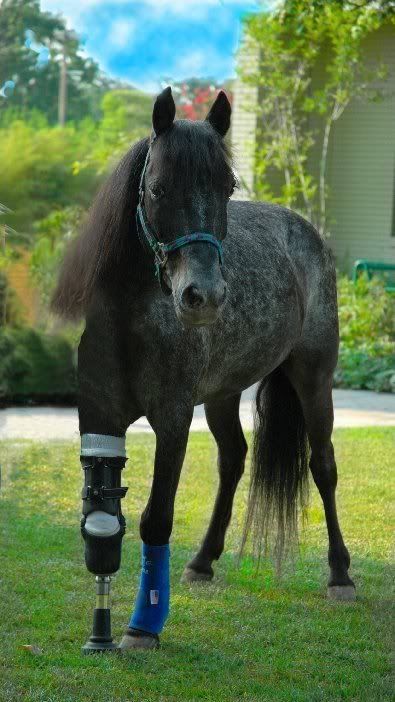
Molly, an amazing horse
Molly is a gray speckled pony who was abandoned by her owners when Katrina hit southern Louisiana, USA.
She spent weeks on her own before finally being rescued and taken to a farm where abandoned animals were stockpiled. While there, she was attacked by a pit bull terrier, and almost died.
Her gnawed right front leg became infected and her vet went to LSU for help. But LSU was overwhelmed, and this pony was a welfare case. But after surgeon Rustin Moore met Molly, he changed his mind. He saw how the pony was careful to lie down on different sides so she didn't seem to get sores, and how she allowed people to handle her.
Moore agreed to remove her leg below the knee and a temporary artificial limb was built. Molly walked out of the clinic and her story really begins there.

Molly happened to be a one-in-a-million patient. She's tough as nails, but sweet, and she was willing to cope with pain. The other important factor is having a truly committed owner who is dedicated to providing the daily care required over the lifetime of the horse.
Molly's story turns into a parable for life in post-Katrina Louisiana . The little pony gained weight, her mane felt a comb. A human prosthesis designer built her a leg.
The prosthetic has given Molly a whole new life, Allison Barca DVM, Molly's regular vet, reports.
(via reddit)
She spent weeks on her own before finally being rescued and taken to a farm where abandoned animals were stockpiled. While there, she was attacked by a pit bull terrier, and almost died.
Her gnawed right front leg became infected and her vet went to LSU for help. But LSU was overwhelmed, and this pony was a welfare case. But after surgeon Rustin Moore met Molly, he changed his mind. He saw how the pony was careful to lie down on different sides so she didn't seem to get sores, and how she allowed people to handle her.
Moore agreed to remove her leg below the knee and a temporary artificial limb was built. Molly walked out of the clinic and her story really begins there.
Molly happened to be a one-in-a-million patient. She's tough as nails, but sweet, and she was willing to cope with pain. The other important factor is having a truly committed owner who is dedicated to providing the daily care required over the lifetime of the horse.
Molly's story turns into a parable for life in post-Katrina Louisiana . The little pony gained weight, her mane felt a comb. A human prosthesis designer built her a leg.
The prosthetic has given Molly a whole new life, Allison Barca DVM, Molly's regular vet, reports.
(via reddit)
Wednesday, 14 May 2008
But can he read now?
Dixie received the first veterinary corneal implant procedure in North America, and one of only a few ever performed. During the surgery, Sinisa Grozdanic, an assistant professor of Veterinary Clinical Sciences at Iowa State University, removed the dog's damaged cloudy cornea and replaced it with a permanent synthetic one.
Source: msnbc
Great tits cope well with warming
The great tits are laying eggs now about two weeks earlier in the year than they were 47 years ago.
The timing is crucial, because for the two-week period after they hatch, the chicks have to gobble down huge quantities of winter moth caterpillars which only emerge for a short period.
via Presurfer
Thursday, 1 May 2008
Run for your life!
With the number of deadly dangerous little creatures slithering, hopping, and swimming on this Earth, it's amazing that mankind has managed to survive.
Here are 20 creatures guaranteed to make you very, very sick at the least, or to kill you, should you happen to meet them.
Let's be careful out there!
Diamondback Rattlesnake
Crotalus atrox
The Western Diamondback, which can exceed seven feet in length, is the king of twenty odd species and sub-species of Southwestern desert rattlers, not only in terms of size, but also in terms of its fearsome reputation.
This viper comes equipped with a spade-shaped head, a fiendish fang and venom system, elliptical pupils and heat-sensing facial pits. It has reserve fangs to replace any which break off in a victim. The venom causes extensive tissue damage, bleeding and swelling in humans.
The diamondback will coil, rattle fearsomely, and stand its ground when threatened. It bites hundreds of people a year, more than any other venomous snake in the United States. It is likely responsible for the majority of snakebite fatalities in northern Mexico and in the USA.
As many as 50% of bites by rattlesnakes are 'dry bites' where no venom is injected. Many folk remedies for snakebite came about because no venom was injected to begin with.
Symptoms include, but are not limited to pain, severe swelling, bruising, blistering, headache, nausea, vomiting, abdominal pain, diarrhea, dizziness, collapse or convulsions, Yellow vision; paraesthesia/numbness of digits, metallic taste in mouth, fasciculations, and/or death. (Photos for those with strong stomachs.)
Black Mamba
Dendroaspis polylepis
Black mambas are fast, nervous, lethally venomous, and when threatened, highly aggressive. They have been blamed for numerous human deaths and are widely considered the world’s deadliest snake. They are also among the fastest snakes in the world, slithering at speeds of up to 12.5 miles per hour.
When cornered, these snakes will raise their heads, sometimes with a third of their body off the ground, spread their cobra-like neck-flap, open their black mouths and hiss. If an attacker persists, the mamba will strike not once, but repeatedly, injecting large amounts of potent neuro- and cardiotoxin with each strike.
Before the advent of black mamba antivenin, a bite from this fearsome serpent was 100 percent fatal, usually within about 20 minutes. Unfortunately, antivenin is still not widely available in the rural parts of the mamba’s range, and mamba-related deaths remain frequent.
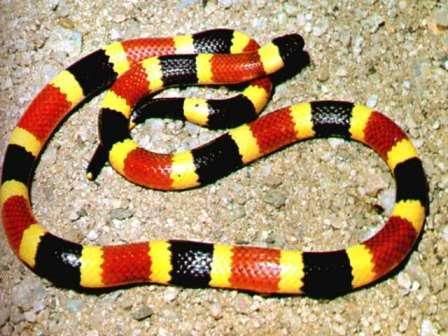
Coral Snake
The order of the bands distinguishes between the non-venomous mimics and the venomous coral snakes: "Red and yellow, kill a fellow; red and black, venom lack."
Coral snakes are highly venomous, they are a relative of the cobra. Their venom is a powerful neurotoxin which paralyzes the nerves.
No deaths related to coral snake bites have been reported in the United States since coral snake antivenin became available. Before that time, the estimated case fatality rate was 10%.
According to a recently published report, no more antivenin is being produced. Wyeth Laboratories, the only manufacturer, phased out production several years ago.
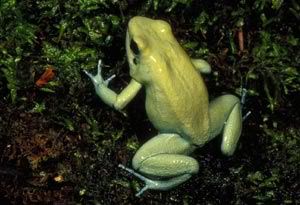
Golden Poison Frog
Phyllobates terribilis
The golden poison frog is so toxic that even touching it can be dangerous. A single frog contains enough poison to kill 20,000 mice or 10 people. It is probably the most poisonous animal on earth.
Indians from Colombia use the poison secreted from the skin of poison dart frogs to treat their blowgun darts. The darts are heated and wiped over the backs of the frogs. Once a dart is poisoned, it remains lethal for up to two years. These darts can be used by the Indians as an easy way to catch small prey.
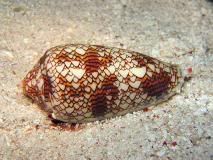
Cone snail
Conus textile
Cone snails are one of the most venomous creatures on earth.
The geographic cone is the most venomous of the 500 known cone snail species, and several human deaths have been attributed to them. Their venom, a complex concoction of hundreds of different toxins, is delivered via a harpoonlike tooth propelled from an extendable proboscis. There is no antivenin for a cone snail sting.
The geographic cone is nicknamed the "cigarette snail," a humorous exaggeration meaning a person stung by one would have enough time to smoke a cigarette before dying.
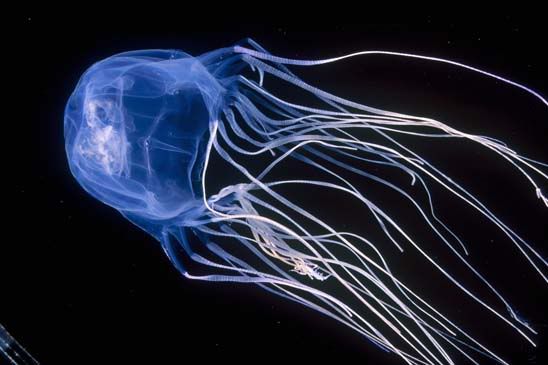
Box jellyfish
Chironex fleckeri
These invertebrates are among most poisonous creatures in the sea. Stings from these species are excruciatingly painful, either initially or as an after-effect, and are often fatal - 5,567 deaths have been recorded since 1954.
The most dangerous jellyfish can carry more than half a million venom triggers per square inch. The venom contains toxins that attack the heart, nervous system, and skin cells. It is so overpoweringly painful, human victims have been known to go into shock and drown or die of heart failure before even reaching shore. Survivors can experience considerable pain for weeks and often have significant scarring where the tentacles made contact.
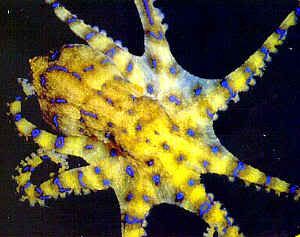
Blue-ringed octopus
Hapalochlaena
This brilliant creature is exceptionally dangerous. Just one bite and you won’t be able to move a muscle. In fact you won’t be able to breathe, or scream! A lot of people who get bitten by these creatures don’t even know it, until the deathly symptoms start to come on. Time till death – less than ten minutes.
This little octopus is about the size of a golf ball and weighs only 10 ounces, but one blue-ringed octopus this size has enough venom to kill 10 men. The venom contains maculotoxin which is more violent than that of any animal found on land. This poison is 10,000 times more potent that cyanide.
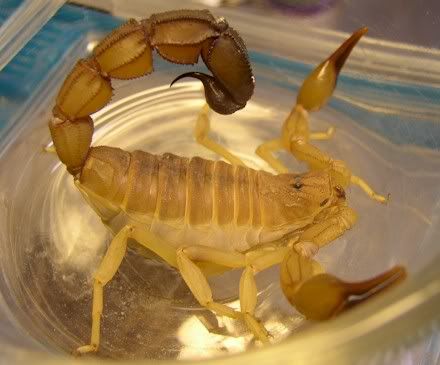
Yellow fat-tailed scorpion
Androctonus australis
These creatures are responsible for the highest number of scorpion-caused human deaths. The sting is hugely painful. After being stung, severe sickness follows, movement becomes hard and breathing becomes very difficult. Chances of survival after this scorpion's bite are slim. Their sting can kill in 2 hours, and faster, if you're allergic to it.
No antivenin is available, but with immediate hospital care, some people have recovered.
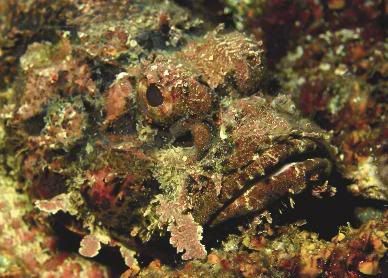
Stonefish
Synanceia verrucosa
The Reef Stonefish is the most venomous fish in the world. It has thirteen stout spines in the dorsal fin which can inject a highly toxic venom. Each spine on a stonefish is said to carry enough venom to kill 1,000 mice. The sting causes excruciating pain and a great deal of swelling rapidly develops causing the affected tissue to die. The symptoms of the venom are muscle weakness, temporary paralysis and shock - which may result in death if left untreated. The pain is excruciating and can last for months with tremendous swelling and death of tissues. Amputation might be required. If not treated, stonefish stings can often be deadly.
Capable of surviving for up to 12 hours on land, the stonefish has even killed people out walking on the beach yards away from the sea. Time until death – 6 hours or less.
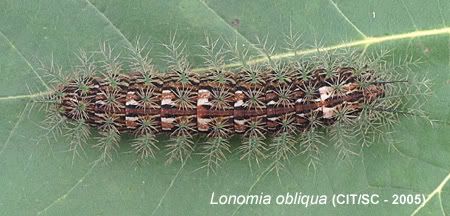
South American silk moth caterpillars
Lonomia obliqua
Lonomia caterpillars have bristles associated with venom glands, called urticating hairs. They produce a chemical anticoagulant of such potency that it can kill a human, causing them to hemorrhage to death. By simply touching this caterpillar's hairs, a person will begin to bleed uncontrollably for 12 to 24 hours and eventually die if not treated.
In southern Brazil the death rate from caterpillar contact is three to six times higher than that observed for snake bites.
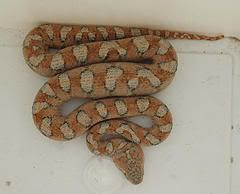
Carpet viper
Echis carinatus
The saw-scaled or carpet viper is generally considered to be the most dangerous snake in the world. Ranging from West Africa through the Middle East to India and Sri Lanka, it probably kills more people in the world than any other species. In Asia alone, it is reported to kill 800 people annually. Its venom is more toxic than any other viper, it is small and easy to overlook and, above all, it becomes extremely aggressive when frightened or disturbed.
The venom of the carpet viper prevents blood from clotting. The poison takes hold and the flesh swells up dramatically. After a few hours any cut on the body will not close. Blood begins to ooze uncontrollably from the bite, then from the nose, from the gums, from the eyes and finally from the very pores in the skin. If treatment comes too late, the swollen flesh can start to die and the patient’s leg or arm literally starts to rot. This putrefying necrosis can cause death by infection.
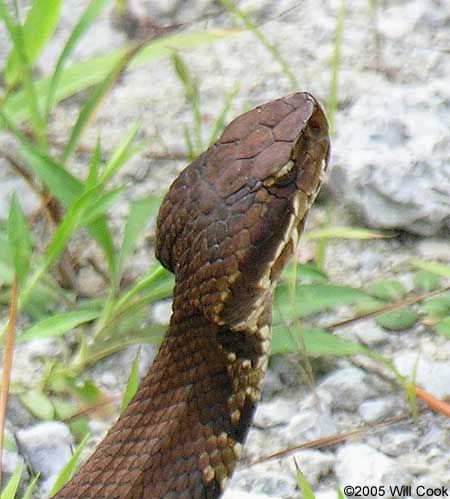
Cottonmouth, Water Moccasin
Agkistrodon piscivorus
There is only one North American poisonous water snake - the Cottonmouth Water Moccasin. They are territorial animals which defend and guard a specific area, thus appearing to be more aggressive than most snakes. Unlike most snakes, when startled the cottonmouth often will stand its ground and open its mouth ("gape" or "smile") to warn predators to stay away.
The venom of the cottonmouth is hemotoxic, causing swelling and necrosis near the site of the wound, and potentially death of the victim if treatment is not received promptly. Like many vipers, the cottonmouth is capable of inflicting what is referred to as a "dry bite", where no venom is injected. However, the bite is extremely painful, prone to gangrene, and loss of digits is possible.
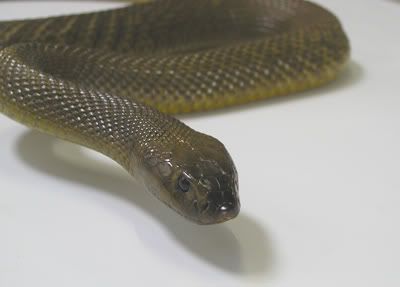
Inland Taipan
Oxyuranus microlepidotus
The Carpet Viper may cause the most deaths, but the Inland Taipan is the most venomous land snake in the world. A single bite from the Inland Taipan contains enough venom to kill as many as 100 human adults. Its venom is 50 times more toxic than that of the Indian Cobra and 650 - 850 times more toxic than that of a Western- or Eastern Diamondback.
Although highly venomous it is a relatively timid snake provided that it is left alone. All known bites have been treated using antivenin.
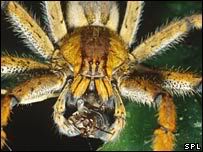
Brazilian Wandering Spider
Phoneutria nigriventer
Brazilian wandering spiders are one of the world's most dangerous arachnids. At best, their venom can seriously sting; at worst, it can kill. They are not only extremely venomous but also very fast and aggressive, and won't hesitate to bite. The Guinness Book of World Records considers the Brazilian wandering spider to be the world’s deadliest spider.
In addition to causing intense pain, the venom of the spider can also cause priapism - uncomfortable erections that can last for many hours and that can lead to impotence. (BBC)
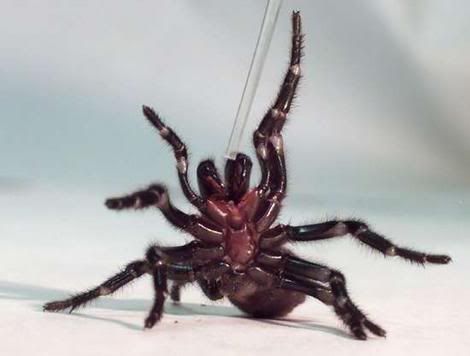
Funnel web spider
Atrax robustus
Bites are dangerous and can cause serious illness or death, one bite from this creature could kill you in just fifteen minutes. The male Sydney Funnel-web Spider is more dangerous than the female. This is because the toxic venom component that attacks the human and primate nervous system so severely is only present in male spiders. Initial symptoms after a bite include local pain, mouth numbness, vomiting, abdominal pain, sweating and salivation.
Antivenin is available and no deaths have occurred since its introduction.
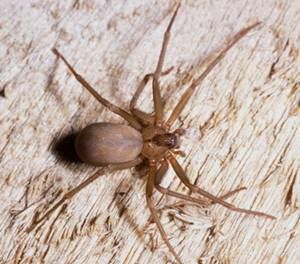
Brown Recluse spider
Loxosceles reclusa
As indicated by its name, this spider is not aggressive and usually bites only when pressed against the skin, such as when tangled up within clothes, towels, or in bedding. But brown recluse venom is extremely poisonous, even more potent than that of a rattlesnake, and its bites can cause serious skin lesions. Yet recluse venom causes less disease than a rattlesnake bite because of the small quantities injected into its victims. The venom of the brown recluse is toxic to cells and tissues.
This spider's venom is a collection of enzymes. One of the specific enzymes, once released into the victim's skin, causes destruction of local cell membranes, which disrupts the integrity of tissues leading to local breakdown of skin, fat, and blood vessels. This process leads to eventual tissue death called necrosis in areas immediately surrounding the bite site.
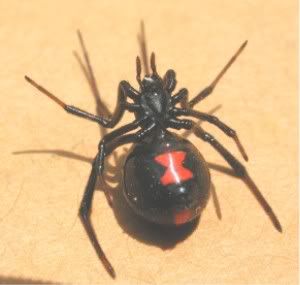
Black widow spider
Latrodectus mactans
This spider's bite is much feared because its venom is reported to be 15 times stronger than a rattlesnake's.
In humans, bites produce muscle aches, nausea, and a paralysis of the diaphragm that can make breathing difficult; however, contrary to popular belief, most people who are bitten suffer no serious damage—let alone death. But bites can be fatal—usually to small children, the elderly, or the infirm.
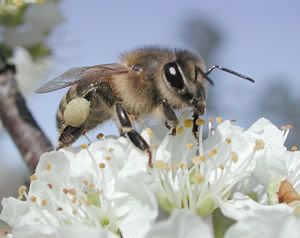
Africanized Honey Bees
hybrids of the African honey bee, Apis mellifera scutellata
Killer bees are descendants of southern African bees imported in 1956 by Brazilian scientists attempting to breed a honey bee better adapted to the South American tropics.
When some of these bees escaped quarantine in 1957, they began breeding with local Brazilian honey bees, quickly multiplying and extended their range. They acquired the name killer bees because they will viciously attack people and animals who unwittingly stray into their territory, often resulting in serious injury or death. An animal or person will be stung dozens to hundreds of times. The angry hive of bees may pursue people and animals for greater distances than regular bees. Even non-allergic people who receive multiple stings can develop life-threatening complications.
(On July 15, 1993, 82-year-old Lino Lopez became the first person to die in the U.S. from Africanized honey bee stings. He was stung more than 40 times while trying to remove a colony from a wall in an abandoned building on his ranch near Harlingen, Texas.)
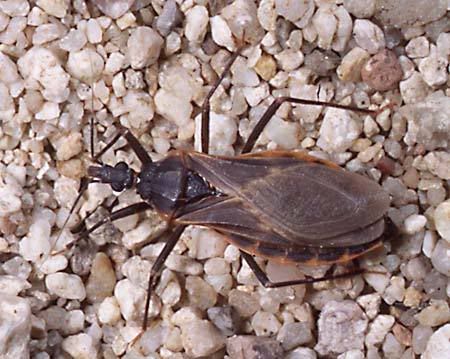
Kissing bug
triatomines rubida
Kissing bugs received their name because they usually bite people near their mouth during the night while they sleep. They are blood-suckers, attracted to the light in our houses, the odors that we exhale, skin odors, and to the warmth of our bodies.
People have moderate to severe allergic reactions to the kissing bug bite. Severe reactions include swelling of the tongue and throat; swollen lymph nodes; small blood-filled blisters; anaphylactic reactions that cause breathing problems, a drop in blood pressure, and shock that can be lethal.
An associated health problem is Chagas Disease. This is caused by a potentially deadly parasite (Trypanosoma cruzi) that lives in the digestive system of the kissing bug and is excreted during defecation or urination of the kissing bug after feeding. If this parasite enters your blood stream through the bite site or an open wound, you might become infected. This is a major health issue in Central and South America where over 18 million people have become infected resulting in 14,000 deaths every year.
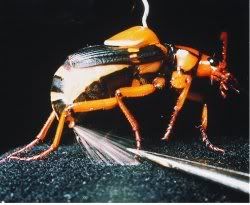
Bombadier beetle
Stenaptinus insignis
The bombardier beetle is notable due to the two small glands located near the end of its abdomen. One gland produces hydrogen peroxide, one gland produces hydroquinone. The two chemicals are mixed and two enzymes, catalase and peroxidase, are added to them. These enzymes speed up the reaction to a level where the beetle can make an audible "pop" as it ejects the now-boiling chemical stream at whatever unlucky predator happened to disturb it. Added to this, the beetle can rotate the end of its abdomen 270 degrees in any direction, which allows for an impressive "firing range." The beetle can discharge upward of 20 times before depleting its glands.
The damage caused can be fatal to attacking insects and small creatures and is painful to human skin.
Photos:
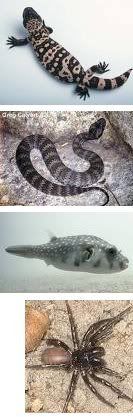
blue-ringed octopus, yellow fat-tailed scorpion, funnel web spider, reef stonefish, box jellyfish, diamondback rattlesnake, cone snail, black widow spider, carpet viper, inland taipan, brown recluse spider, Brazilian wandering spider, golden poison frog, lonomia caterpillar, coral snake, Africanized bees, kissing bug, Bombadier beetle, black mamba, cottonmouth
Here are 20 creatures guaranteed to make you very, very sick at the least, or to kill you, should you happen to meet them.
Let's be careful out there!
Crotalus atrox
The Western Diamondback, which can exceed seven feet in length, is the king of twenty odd species and sub-species of Southwestern desert rattlers, not only in terms of size, but also in terms of its fearsome reputation.
This viper comes equipped with a spade-shaped head, a fiendish fang and venom system, elliptical pupils and heat-sensing facial pits. It has reserve fangs to replace any which break off in a victim. The venom causes extensive tissue damage, bleeding and swelling in humans.
The diamondback will coil, rattle fearsomely, and stand its ground when threatened. It bites hundreds of people a year, more than any other venomous snake in the United States. It is likely responsible for the majority of snakebite fatalities in northern Mexico and in the USA.
As many as 50% of bites by rattlesnakes are 'dry bites' where no venom is injected. Many folk remedies for snakebite came about because no venom was injected to begin with.
Symptoms include, but are not limited to pain, severe swelling, bruising, blistering, headache, nausea, vomiting, abdominal pain, diarrhea, dizziness, collapse or convulsions, Yellow vision; paraesthesia/numbness of digits, metallic taste in mouth, fasciculations, and/or death. (Photos for those with strong stomachs.)
Dendroaspis polylepis
Black mambas are fast, nervous, lethally venomous, and when threatened, highly aggressive. They have been blamed for numerous human deaths and are widely considered the world’s deadliest snake. They are also among the fastest snakes in the world, slithering at speeds of up to 12.5 miles per hour.
When cornered, these snakes will raise their heads, sometimes with a third of their body off the ground, spread their cobra-like neck-flap, open their black mouths and hiss. If an attacker persists, the mamba will strike not once, but repeatedly, injecting large amounts of potent neuro- and cardiotoxin with each strike.
Before the advent of black mamba antivenin, a bite from this fearsome serpent was 100 percent fatal, usually within about 20 minutes. Unfortunately, antivenin is still not widely available in the rural parts of the mamba’s range, and mamba-related deaths remain frequent.
The order of the bands distinguishes between the non-venomous mimics and the venomous coral snakes: "Red and yellow, kill a fellow; red and black, venom lack."
Coral snakes are highly venomous, they are a relative of the cobra. Their venom is a powerful neurotoxin which paralyzes the nerves.
No deaths related to coral snake bites have been reported in the United States since coral snake antivenin became available. Before that time, the estimated case fatality rate was 10%.
According to a recently published report, no more antivenin is being produced. Wyeth Laboratories, the only manufacturer, phased out production several years ago.
Phyllobates terribilis
The golden poison frog is so toxic that even touching it can be dangerous. A single frog contains enough poison to kill 20,000 mice or 10 people. It is probably the most poisonous animal on earth.
Indians from Colombia use the poison secreted from the skin of poison dart frogs to treat their blowgun darts. The darts are heated and wiped over the backs of the frogs. Once a dart is poisoned, it remains lethal for up to two years. These darts can be used by the Indians as an easy way to catch small prey.
Conus textile
Cone snails are one of the most venomous creatures on earth.
The geographic cone is the most venomous of the 500 known cone snail species, and several human deaths have been attributed to them. Their venom, a complex concoction of hundreds of different toxins, is delivered via a harpoonlike tooth propelled from an extendable proboscis. There is no antivenin for a cone snail sting.
The geographic cone is nicknamed the "cigarette snail," a humorous exaggeration meaning a person stung by one would have enough time to smoke a cigarette before dying.
Chironex fleckeri
These invertebrates are among most poisonous creatures in the sea. Stings from these species are excruciatingly painful, either initially or as an after-effect, and are often fatal - 5,567 deaths have been recorded since 1954.
The most dangerous jellyfish can carry more than half a million venom triggers per square inch. The venom contains toxins that attack the heart, nervous system, and skin cells. It is so overpoweringly painful, human victims have been known to go into shock and drown or die of heart failure before even reaching shore. Survivors can experience considerable pain for weeks and often have significant scarring where the tentacles made contact.
Hapalochlaena
This brilliant creature is exceptionally dangerous. Just one bite and you won’t be able to move a muscle. In fact you won’t be able to breathe, or scream! A lot of people who get bitten by these creatures don’t even know it, until the deathly symptoms start to come on. Time till death – less than ten minutes.
This little octopus is about the size of a golf ball and weighs only 10 ounces, but one blue-ringed octopus this size has enough venom to kill 10 men. The venom contains maculotoxin which is more violent than that of any animal found on land. This poison is 10,000 times more potent that cyanide.
Androctonus australis
These creatures are responsible for the highest number of scorpion-caused human deaths. The sting is hugely painful. After being stung, severe sickness follows, movement becomes hard and breathing becomes very difficult. Chances of survival after this scorpion's bite are slim. Their sting can kill in 2 hours, and faster, if you're allergic to it.
No antivenin is available, but with immediate hospital care, some people have recovered.
Synanceia verrucosa
The Reef Stonefish is the most venomous fish in the world. It has thirteen stout spines in the dorsal fin which can inject a highly toxic venom. Each spine on a stonefish is said to carry enough venom to kill 1,000 mice. The sting causes excruciating pain and a great deal of swelling rapidly develops causing the affected tissue to die. The symptoms of the venom are muscle weakness, temporary paralysis and shock - which may result in death if left untreated. The pain is excruciating and can last for months with tremendous swelling and death of tissues. Amputation might be required. If not treated, stonefish stings can often be deadly.
Capable of surviving for up to 12 hours on land, the stonefish has even killed people out walking on the beach yards away from the sea. Time until death – 6 hours or less.
Lonomia obliqua
Lonomia caterpillars have bristles associated with venom glands, called urticating hairs. They produce a chemical anticoagulant of such potency that it can kill a human, causing them to hemorrhage to death. By simply touching this caterpillar's hairs, a person will begin to bleed uncontrollably for 12 to 24 hours and eventually die if not treated.
In southern Brazil the death rate from caterpillar contact is three to six times higher than that observed for snake bites.
Echis carinatus
The saw-scaled or carpet viper is generally considered to be the most dangerous snake in the world. Ranging from West Africa through the Middle East to India and Sri Lanka, it probably kills more people in the world than any other species. In Asia alone, it is reported to kill 800 people annually. Its venom is more toxic than any other viper, it is small and easy to overlook and, above all, it becomes extremely aggressive when frightened or disturbed.
The venom of the carpet viper prevents blood from clotting. The poison takes hold and the flesh swells up dramatically. After a few hours any cut on the body will not close. Blood begins to ooze uncontrollably from the bite, then from the nose, from the gums, from the eyes and finally from the very pores in the skin. If treatment comes too late, the swollen flesh can start to die and the patient’s leg or arm literally starts to rot. This putrefying necrosis can cause death by infection.
Agkistrodon piscivorus
There is only one North American poisonous water snake - the Cottonmouth Water Moccasin. They are territorial animals which defend and guard a specific area, thus appearing to be more aggressive than most snakes. Unlike most snakes, when startled the cottonmouth often will stand its ground and open its mouth ("gape" or "smile") to warn predators to stay away.
The venom of the cottonmouth is hemotoxic, causing swelling and necrosis near the site of the wound, and potentially death of the victim if treatment is not received promptly. Like many vipers, the cottonmouth is capable of inflicting what is referred to as a "dry bite", where no venom is injected. However, the bite is extremely painful, prone to gangrene, and loss of digits is possible.
Oxyuranus microlepidotus
The Carpet Viper may cause the most deaths, but the Inland Taipan is the most venomous land snake in the world. A single bite from the Inland Taipan contains enough venom to kill as many as 100 human adults. Its venom is 50 times more toxic than that of the Indian Cobra and 650 - 850 times more toxic than that of a Western- or Eastern Diamondback.
Although highly venomous it is a relatively timid snake provided that it is left alone. All known bites have been treated using antivenin.
Phoneutria nigriventer
Brazilian wandering spiders are one of the world's most dangerous arachnids. At best, their venom can seriously sting; at worst, it can kill. They are not only extremely venomous but also very fast and aggressive, and won't hesitate to bite. The Guinness Book of World Records considers the Brazilian wandering spider to be the world’s deadliest spider.
In addition to causing intense pain, the venom of the spider can also cause priapism - uncomfortable erections that can last for many hours and that can lead to impotence. (BBC)
Atrax robustus
Bites are dangerous and can cause serious illness or death, one bite from this creature could kill you in just fifteen minutes. The male Sydney Funnel-web Spider is more dangerous than the female. This is because the toxic venom component that attacks the human and primate nervous system so severely is only present in male spiders. Initial symptoms after a bite include local pain, mouth numbness, vomiting, abdominal pain, sweating and salivation.
Antivenin is available and no deaths have occurred since its introduction.
Loxosceles reclusa
As indicated by its name, this spider is not aggressive and usually bites only when pressed against the skin, such as when tangled up within clothes, towels, or in bedding. But brown recluse venom is extremely poisonous, even more potent than that of a rattlesnake, and its bites can cause serious skin lesions. Yet recluse venom causes less disease than a rattlesnake bite because of the small quantities injected into its victims. The venom of the brown recluse is toxic to cells and tissues.
This spider's venom is a collection of enzymes. One of the specific enzymes, once released into the victim's skin, causes destruction of local cell membranes, which disrupts the integrity of tissues leading to local breakdown of skin, fat, and blood vessels. This process leads to eventual tissue death called necrosis in areas immediately surrounding the bite site.
Latrodectus mactans
This spider's bite is much feared because its venom is reported to be 15 times stronger than a rattlesnake's.
In humans, bites produce muscle aches, nausea, and a paralysis of the diaphragm that can make breathing difficult; however, contrary to popular belief, most people who are bitten suffer no serious damage—let alone death. But bites can be fatal—usually to small children, the elderly, or the infirm.
hybrids of the African honey bee, Apis mellifera scutellata
Killer bees are descendants of southern African bees imported in 1956 by Brazilian scientists attempting to breed a honey bee better adapted to the South American tropics.
When some of these bees escaped quarantine in 1957, they began breeding with local Brazilian honey bees, quickly multiplying and extended their range. They acquired the name killer bees because they will viciously attack people and animals who unwittingly stray into their territory, often resulting in serious injury or death. An animal or person will be stung dozens to hundreds of times. The angry hive of bees may pursue people and animals for greater distances than regular bees. Even non-allergic people who receive multiple stings can develop life-threatening complications.
(On July 15, 1993, 82-year-old Lino Lopez became the first person to die in the U.S. from Africanized honey bee stings. He was stung more than 40 times while trying to remove a colony from a wall in an abandoned building on his ranch near Harlingen, Texas.)
triatomines rubida
Kissing bugs received their name because they usually bite people near their mouth during the night while they sleep. They are blood-suckers, attracted to the light in our houses, the odors that we exhale, skin odors, and to the warmth of our bodies.
People have moderate to severe allergic reactions to the kissing bug bite. Severe reactions include swelling of the tongue and throat; swollen lymph nodes; small blood-filled blisters; anaphylactic reactions that cause breathing problems, a drop in blood pressure, and shock that can be lethal.
An associated health problem is Chagas Disease. This is caused by a potentially deadly parasite (Trypanosoma cruzi) that lives in the digestive system of the kissing bug and is excreted during defecation or urination of the kissing bug after feeding. If this parasite enters your blood stream through the bite site or an open wound, you might become infected. This is a major health issue in Central and South America where over 18 million people have become infected resulting in 14,000 deaths every year.
Stenaptinus insignis
The bombardier beetle is notable due to the two small glands located near the end of its abdomen. One gland produces hydrogen peroxide, one gland produces hydroquinone. The two chemicals are mixed and two enzymes, catalase and peroxidase, are added to them. These enzymes speed up the reaction to a level where the beetle can make an audible "pop" as it ejects the now-boiling chemical stream at whatever unlucky predator happened to disturb it. Added to this, the beetle can rotate the end of its abdomen 270 degrees in any direction, which allows for an impressive "firing range." The beetle can discharge upward of 20 times before depleting its glands.
The damage caused can be fatal to attacking insects and small creatures and is painful to human skin.
Photos:
blue-ringed octopus, yellow fat-tailed scorpion, funnel web spider, reef stonefish, box jellyfish, diamondback rattlesnake, cone snail, black widow spider, carpet viper, inland taipan, brown recluse spider, Brazilian wandering spider, golden poison frog, lonomia caterpillar, coral snake, Africanized bees, kissing bug, Bombadier beetle, black mamba, cottonmouth
Monday, 21 April 2008
Koreans clone drug-sniffer dogs
Six white male dogs collectively named Toppy reported for duty at a training facility for sniffer dogs run by the Korea Customs Service in Yeongjongdo.
Chase, the father of the dogs, and his six sons look exactly the same -- because the sons were cloned, born to surrogate mothers via the transfer of the nucleui of Chase’s somatic cells.
“Toppy” is a compound name meaning “tomorrow’s puppy”; the Toppies are numbered one to seven to tell them apart. The Korea Customs Service commissioned the cloning project because they thought that training clones of an effective sniffer dog would be easier than training ordinary dogs, which may or may not have the right genetic makeup for the job.
Source: English chosun
Wednesday, 16 April 2008
Saving lives with venom
Medical researchers are finding a positive side to these dangerous creatures: the complex and highly sophisticated poisons produced by these creatures have components that might save lives rather than kill.
The PBS show, Nature, Victims of Venom, illustrates how some of the animals we fear most may one day soon be helping us solve or alleviate a wide range of life-threatening medical problems.
Venomous animals use their toxins to capture prey or defend themselves. They inflict their poisons by biting, stinging, and, in the case of some marine animals, by emitting venom into the water so it can be absorbed through the skin. The venom itself typically comprises many different substances that have various effects on their victims.
The film introduces us to carefully trained researchers around the world who are risking harm - even death - to themselves by "milking" the venom of live animals so that the various components of these poisons can be studied in great detail and better understood, perhaps preparing the way for clinical trials against a variety of diseases and medical conditions. It's not only a dangerous job but a laborious one, since only tiny amounts of venom can be extracted at a time.
Heart disease, stroke, various cancers, and the management of chronic and severe pain are other potential targets of the chemicals that comprise venom.
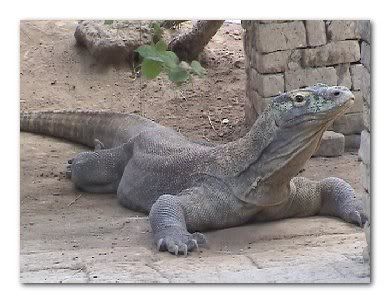
Komodo Dragon's Deadly Bite
A new study reveals that a few dozen razor-sharp teeth combined with beefy neck muscles make up for the reptile's dainty chomp.
The Komodo displays a unique hold-and-pull feeding technique. The lizard nabs prey with 60 perilous teeth, although its bite is weak. To make up for the lack of biting power, strong throat muscles drag the meal through the razor-sharp jowls and into the stomach.
Once a Komodo dragon maims its prey, which can weigh nearly as much as the lizard, it is swallowed whole and later regurgitated in a foul-smelling pellet of hair, bone and other indigestible remains. The lizards are also known for their infectious bites and parthenogenesis, or the ability to reproduce without mating.
Source: Yahoo News
Friday, 4 April 2008
Cedric - savior of Tasmanian devils
He is an extraordinary devil, guinea pig and possible savior, who is naturally resistant to the contagious facial tumors which have already killed half the devil population in Tasmania.
Scientists have discovered it is Cedric's genes that are protecting him from the cancer and hope to create a vaccine to save other devils.
Source: ABC News
Wednesday, 26 March 2008
This is fast evolution?
Scientists have pinned down the fastest-known evolving animal — a "living dinosaur" called a tuatara.
Researchers found that although tuatara have remained largely unchanged physically over very long periods of evolution, they are evolving — at a DNA level — faster than any other animal yet examined.

Photo Credit: Reb/Dreamstime
Source: MSNBC
Researchers found that although tuatara have remained largely unchanged physically over very long periods of evolution, they are evolving — at a DNA level — faster than any other animal yet examined.
Photo Credit: Reb/Dreamstime
Source: MSNBC
Subscribe to:
Posts (Atom)